

Do I Still Need an Arizona CCW Permit? Current Laws and Practical Considerations in 2026
Arizona law lets you carry a concealed handgun without a permit if you meet basic requirements. If you're 21 or older and legally allowed to own a gun, you can carry concealed under the state's constitutional carry rules.
Even though you don't need a permit for daily carry, getting one still offers real benefits. A permit gives you the ability to carry in over 35 other states, lets you skip background checks when buying guns, and allows you to carry in places like restaurants that serve alcohol. You'll also get legal protections under federal law and proof of firearms training that could help you if legal issues come up.
Arizona Is a Constitutional Carry State—Do You Still Need a CCW Permit?

Arizona lets most people carry a concealed handgun without a permit. The state has had constitutional carry laws since 2010. If you're at least 21 years old and legally allowed to own a gun, you can carry concealed in most places without an Arizona concealed carry permit.
You don't need an Arizona CCW permit for everyday carry within state borders. The law doesn't make you complete training courses, submit applications, or pay fees just to carry a concealed weapon.
Who cannot carry without a permit:
- Convicted felons whose rights haven't been restored
- People ruled mentally incompetent by a court
- Domestic violence offenders in certain cases
- Non-citizens unlawfully in the United States
- Individuals under specific court protective orders
Age matters when you carry. You can openly carry a visible firearm at 18 if you legally own it. But concealed carry without an Arizona concealed weapons permit requires you to be 21 or older.
Even though Arizona gun laws don't require a concealed carry permit for most situations, getting an Arizona CCW still offers real benefits. Federal laws about school zones work differently for permit holders. If you travel to other states, your Arizona concealed carry permit may give you legal carry rights through reciprocity agreements.
Your Arizona concealed weapons permit also shows you completed background checks and training. This can matter during police encounters or in legal situations. The permit isn't required, but it provides legal protections that constitutional carry alone doesn't cover in specific circumstances. Some businesses that serve alcohol treat permit holders differently under Arizona gun laws.
Who Can Carry Firearms Without a Permit in Arizona

Carrying a Hidden Firearm Without Documentation
Arizona law allows you to carry a concealed firearm without getting a permit if you meet certain requirements. You must be at least 21 years old. You also need to be legally allowed to own firearms under state law.
You must be lawfully present in the United States. State law under A.R.S. § 13-3102 sets out the basic framework for constitutional carry in Arizona. You cannot fall into any categories that would make firearm possession illegal for you.
Carrying an Openly Visible Firearm Without Documentation
You only need to be 18 years old to carry a firearm openly in Arizona. The firearm must be clearly visible on your person to count as open carry.
You cannot be in any prohibited category under misconduct involving weapons statutes. This means you must be legally allowed to possess firearms under both state and federal law.
Carrying Firearms in Your Vehicle
When you are 21 or older, you can keep a loaded handgun in your vehicle without any permit. The firearm can be concealed in your car.
If you are between 18 and 20 years old, different rules apply to you. Your firearm may need to be visible or kept in specific locations within your vehicle to stay legal.
Federal Laws That Override State Rules
Federal restrictions still apply even though Arizona allows permitless carry. These federal laws can prohibit you from possessing firearms regardless of what state law allows.
Federal prohibitions include:
- Certain visa holder categories
- Active federal restraining orders
- Specific federal convictions
- Mental health adjudications
Contact an attorney if you have any criminal history or questions about your eligibility. Federal law can be more restrictive than Arizona law.
Why Getting a Permit Still Makes Sense in Arizona's Constitutional Carry System

Using Your Permit Across State Borders
Arizona lets you carry without a permit inside the state. But those rules stop at the border.
A permit from Arizona works in over 30 other states through recognition agreements. This means places like Texas, Florida, and Virginia let Arizona permit holders carry concealed legally. Without that permit, you lose this protection the moment you leave Arizona.
Most states still require permits. Some only honor permits from your home state. If you carry across state lines without proper documentation, you risk felony weapons charges.
You need to research every state you plan to visit. Check these facts before you go:
- Limits on magazine size
- Rules about telling police officers you have a gun
- Locations that ban firearms completely
- Current status of state agreements
State agreements change over time. What worked last year might not work today. Your Arizona permit gives you legal standing in dozens of states where constitutional carry does not exist or does not apply to visitors.
Federal School Zone Requirements
Federal law bans guns within 1,000 feet of school property. This applies everywhere in America, including Arizona.
The Gun-Free School Zones Act creates this boundary around every K-12 school. Arizona's permitless carry laws do not override federal rules. But the federal law includes an exemption for people who hold valid state permits issued after background checks.
Your Arizona permit qualifies you for this exemption. Here's what you need to know:
- You still cannot enter school buildings or grounds with firearms
- School policies and Arizona laws add their own restrictions
- The permit only covers the zone around schools, not the schools themselves
Cities pack schools into neighborhoods. In Phoenix, Tucson, or Mesa, you might pass within 1,000 feet of a school without realizing it. No signs mark these zones. Your permit protects you from accidentally violating federal law while carrying legally under state law.
Federal charges under this law don't happen often. But when they do, they bring felony penalties. A permit adds a layer of protection for regular carriers.
Bringing Guns Into Places That Serve Drinks
Arizona treats gun carrying differently at bars and restaurants depending on your permit status. The rules also change based on whether you drink.
With a valid permit, you can carry concealed at most locations that serve alcohol if you follow these rules:
- No posted signs ban weapons
- You don't consume any alcohol
Without a permit, carrying at certain alcohol-licensed businesses breaks the law. Arizona has thousands of these locations. This affects your daily life more than you might think.
Posted "no firearms" signs apply to everyone. Ignoring these warnings leads to:
- Misdemeanor criminal charges
- Permit revocation
- Additional weapons violations
You need clear understanding of where your gun can legally go. If you eat out regularly or work near places serving alcohol, this knowledge matters every day.
Faster Gun Purchases at Dealers
Your permit lets you skip the instant check when buying from licensed dealers. Federal rules allow this when your permit stays current and was issued within five years.
Licensed dealers in Arizona accept valid permits instead of running the instant check system. This speeds up your purchase significantly.
This helps these buyers:
- People who purchase firearms multiple times per year
- Anyone buying during peak seasons when checks get backed up
- Collectors adding to their inventory regularly
The exemption does not erase federal ownership restrictions. New convictions or other disqualifying events still make possession illegal, even without a background check. Some out-of-state purchases don't qualify, and dealers can always choose to run checks anyway.
Proof of Education in Legal Cases
Arizona requires firearms competency proof for permits. Most people take approved courses covering safe practices and legal force rules. These classes typically run eight hours and include range time.
Your documented training can help if you face charges or legal questions later:
|
Legal Situation |
Value of Your Training |
|---|---|
|
Self-defense case |
Shows you learned legal force standards |
|
Negligence claims |
Proves knowledge of safe handling |
|
Weapons charges |
Documents responsible preparation |
|
Civil lawsuits |
Supports reasonable action claims |
Training does not prevent charges or lawsuits. But courts look at whether your fear made sense, whether you acted carelessly, and whether you showed responsibility.
Quality classes cover key Arizona self-defense laws:
- When force is legally justified
- When deadly force becomes appropriate
- Rules for defending other people
- Whether you must try to escape first
- What to do after using force
This education provides real knowledge about your rights and duties. It also creates records showing you prepared before carrying a weapon.
Courts can weigh your training when judging your actions. Prosecutors and civil lawyers often check whether someone facing weapons charges completed formal education.
Programs that meet Law Enforcement Officers Safety Act (LEOSA) standards show even higher training levels. LEOSA training demonstrates you met federal requirements used for current and retired law enforcement officers.
Police Response to Permitted Carriers
Officers often treat permit holders differently than constitutional carriers.
When you show a valid permit during traffic stops or other contacts, you communicate important facts:
- You cleared a background investigation
- You finished required training
- The state confirmed your eligibility
- You follow official procedures
This changes how officers see the situation. A permit does not give you immunity or special rights. But it proves you did more than the minimum.
Real advantages during police contacts:
- Officers know you were recently checked
- You probably understand basic gun laws
- You learned safe handling methods
- You invested in legal compliance
Many Arizona classes teach proper behavior during police encounters while armed. This includes when to mention your gun, how to keep hands visible, and how to prevent dangerous confusion.
Your permit shows up in law enforcement systems. When officers check your information during stops, your permit appears in their results. This tells them you might be armed and that you went through the permit process.
Nothing guarantees positive results every time. Officers act based on what they see, the circumstances, and their own training. But your permit provides context that can shape how things go.
If you face weapons charges, permit status matters. It shows you qualified legally at permit issue time. This becomes part of your legal record and defense options.
Places Where Firearms Are Still Prohibited
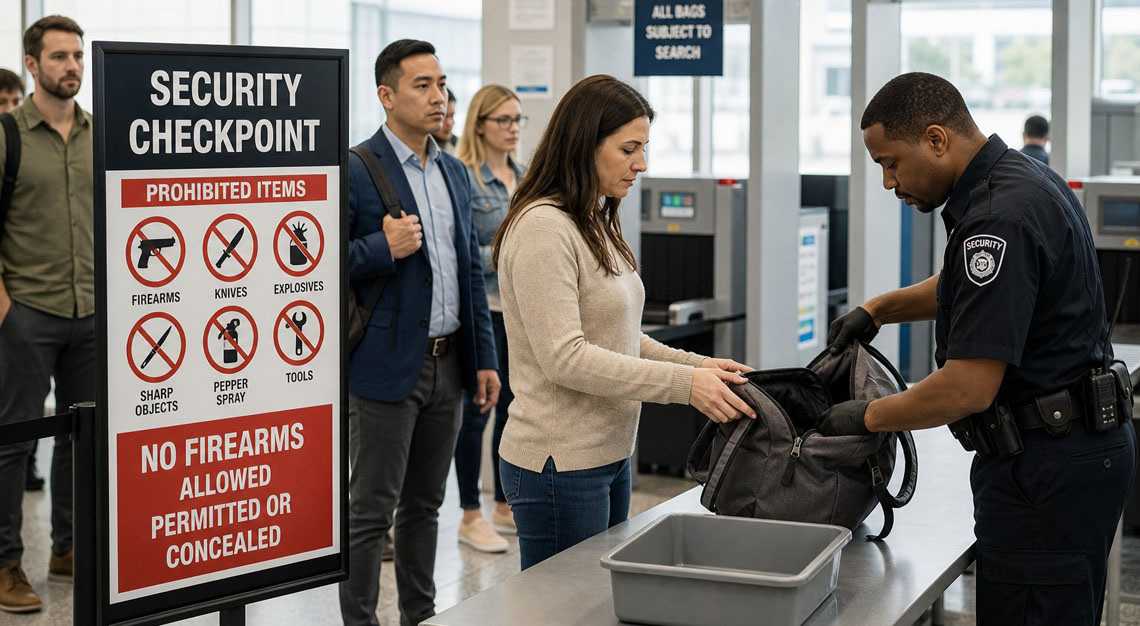
Restricted Locations Under State and Federal Law
Arizona lets you carry concealed without a permit. But this does not mean you can carry everywhere. Both state and federal laws ban firearms in specific places.
If you carry in these forbidden areas, you break the law. The charge is misconduct involving weapons. This is a class 1 misdemeanor in Arizona. A conviction creates a criminal record that can damage your employment opportunities and limit your rights.
Schools (K-12): You cannot bring weapons onto school property. This includes all buildings and fenced areas. Arizona law allows very limited exceptions for guns locked in your vehicle. Most of the campus stays off-limits.
Federal Properties: Courthouses, post offices, and federal government buildings do not allow guns. Federal law controls these locations no matter what your state permit says. Breaking this rule leads to federal charges.
Airport Secure Areas: You cannot carry past security screening in airport terminals. This federal ban applies across the country.
Correctional Facilities: State and federal jails and prisons prohibit all weapons. The restricted zone includes the surrounding areas of these buildings.
Buildings with Security Screening: Locations that use metal detectors or weapon scanners at entrances ban firearms inside.
Private Businesses with Posted Notices: Property owners can prohibit weapons on their premises. When you see "no weapons" signs, you must respect them. Ignoring these notices can result in trespassing charges.
Voting Locations: You cannot carry at polling places on election days during voting hours.
Critical Infrastructure Sites: Nuclear power plants and hydroelectric facilities ban all weapons for security purposes.
Many people believe constitutional carry means they can bring guns anywhere. This is false. The consequences for violating these restrictions are severe. You face possible jail time, fines reaching $5,000, and loss of gun ownership rights. A school zone violation can bring up to five years in prison.
You need to check the rules for specific locations before you carry there. When you feel unsure, keep your firearm secured somewhere else. Legal guidance helps if you carry often or need clarity about particular places.
Requirements, Training, and Application Steps for Arizona CCW Permits

Qualification Standards for Arizona Permits
You must meet specific standards to qualify for a concealed carry permit in Arizona. You need to be at least 21 years old. You must be a U.S. citizen or lawful permanent resident. Most applicants need Arizona residency, though some non-residents can qualify.
You cannot be a prohibited possessor under state or federal law. This includes people with certain felony convictions unless your rights have been restored. Mental health adjudications that disqualify you will also prevent approval.
If you are between 18 and 20 years old, you can open carry but must follow specific vehicle storage rules for concealed carry. Active military members and honorably discharged veterans may have alternative ways to demonstrate their firearms competency.
Demonstrating Firearm Competency
You need to prove you can handle firearms safely. The Arizona Department of Public Safety (AZDPS) accepts multiple forms of proof. You can complete a state-approved firearms training course. Hunter safety courses through the Arizona Game and Fish Department also qualify.
Military or law enforcement training that meets Arizona Peace Officer Standards and Training requirements works as well. Instruction from qualified firearms safety instructors counts. Any recognized documentation of firearms proficiency satisfies this requirement.
Your training should cover safe handling and storage practices. It must also include legal use-of-force principles under Arizona self-defense laws.
Completing the Application Process
The Concealed Weapons Permit Unit (CWPU) handles all permit applications. You need to complete several steps:
- Fill out the AZDPS concealed weapons permit application form with accurate details
- Get fingerprinted for your background check
- Gather your proof of firearms training from an approved course
- Pay the application fee of approximately $60 (verify current costs on the AZDPS website)
The CWPU reviews your submitted materials to confirm you meet all qualification standards.
Permit Duration and Renewal
Your permit remains valid for five years from its issue date. You can begin renewal before expiration. The renewal process requires a new background check and fee payment.
Renewing before expiration typically means you skip new fingerprints. If your permit expires, you may need to provide additional documentation when reapplying.
You should consult a lawyer if you have past arrests, restraining orders, or records from other states. This helps you understand your eligibility and prevents application complications.
Frequently Asked Questions About Concealed Carry in Arizona

Can Visitors Carry Concealed Firearms Without a Permit in Arizona?
Visitors to Arizona who are 21 or older may carry a concealed firearm without obtaining a permit. The state's constitutional carry law extends to non-residents.
Out-of-state visitors must follow the same regulations that apply to Arizona residents. This includes respecting all prohibited locations and following proper carry procedures.
You cannot carry if you fall under prohibited possessor status. Certain criminal records and legal restrictions can disqualify you from possessing firearms.
While Arizona recognizes permits from many other states, these agreements mainly affect your ability to carry when you leave Arizona. Anyone with past criminal issues should consult with an attorney before carrying to confirm legal eligibility.
Can Someone With a Restored Felony Record Obtain a Permit?
People with felony convictions may regain their firearm rights through Arizona's court system. The restoration process requires legal action and specific qualifications.
The Department of Public Safety examines all applications to verify current eligibility. They check whether your rights have been properly restored under both Arizona law and federal regulations.
Key steps before applying or carrying:
- Examine all court documents from your original case
- Locate and review any rights restoration orders
- Confirm no remaining legal restrictions apply
- Speak with a lawyer about your individual case
Possessing a firearm while legally prohibited creates exposure to serious criminal penalties. Rights restoration is complex and requires proper legal documentation.
What Actions Lead to Permit Suspension or Revocation?
The Department of Public Safety will remove or suspend your permit when you no longer meet eligibility standards. Specific legal events trigger this action.
Reasons for suspension or revocation include:
- Criminal convictions that create disqualification
- Court-issued protective orders
- Mental health determinations
- Additional legal prohibitions on firearm possession
Domestic violence cases may require you to turn over both your firearms and permit to authorities. Anyone who receives a suspension or revocation notice should contact a criminal defense lawyer immediately. You might have ways to fix the situation or reapply after resolving the underlying issue.
Do You Have to Tell Officers You're Armed During Police Encounters?
Arizona does not require you to notify police officers that you're carrying a concealed weapon. You have no duty to announce this during traffic stops or other interactions.
If an officer directly asks about weapons, you must provide honest answers. You also need to comply with every instruction from law enforcement.
Best practices during police interactions:
- Keep both hands visible at all times
- Avoid rapid or unexpected movements
- State your firearm's location if questioned
- Get clear permission before reaching near your weapon
- Remain composed and follow every command
Many states enforce different notification requirements. Some mandate immediate disclosure when stopped by police. Always research local laws before carrying firearms in other states.
Is Training Required for Constitutional Carry?
No training class is mandatory to carry concealed under Arizona's constitutional carry law. Anyone 21 years or older who can legally own a firearm may carry concealed without completing any courses.
Training remains valuable despite not being legally required. Proper instruction helps you stay legal and safe.
Comprehensive training programs teach:
- Proper handling and secure storage methods
- Arizona's legal standards for using force
- Situations where armed self-defense is lawful
- How to prevent charges like unlawful display or reckless discharge
Training becomes mandatory only if you choose to obtain an Arizona CCW permit. The permit application process includes a training component, though constitutional carry itself does not.
Contact Arizona Criminal Lawyer for Help With Gun Laws in Arizona

Arizona permits people to carry firearms without a permit, but the laws include many details that can be hard to understand. Not knowing where you can legally carry or what restrictions apply could lead to criminal charges.
The legal team at Arizona Criminal Lawyer helps people who want to get a concealed carry permit, understand their rights while carrying, or fight weapons charges. You can get legal support whether you need guidance before problems start or defense during a criminal case.
Call (602) 610-5019 to schedule a consultation and talk about your case with skilled defense lawyers who know Arizona gun laws.


