

Field Sobriety Tests in Arizona: Are You Allowed to Refuse Them?
Your Legal Rights and Consequences of Refusal: What Drivers Need to Know About Legal Requirements and Rights
When police stop you for suspected driving under the influence in Arizona, you face different testing options with different rules. Field sobriety tests are not mandatory under Arizona DUI law. You can legally say no to these roadside physical exercises without automatic penalties.
The officer needs probable cause to investigate you for a potential Arizona DUI. Field sobriety tests help officers build their case, but you are not required to participate. These tests are voluntary.
However, chemical tests work differently. Arizona uses an implied consent rule for blood and breath tests after an arrest. This means:
- You can refuse field sobriety tests before arrest
- Chemical tests after arrest carry penalties if refused
- Your refusal can be used as evidence against you
Understanding the difference between roadside tests and chemical tests helps you know your rights. Each choice you make during a DUI stop has potential consequences for your case.
What Are Field Sobriety Tests?
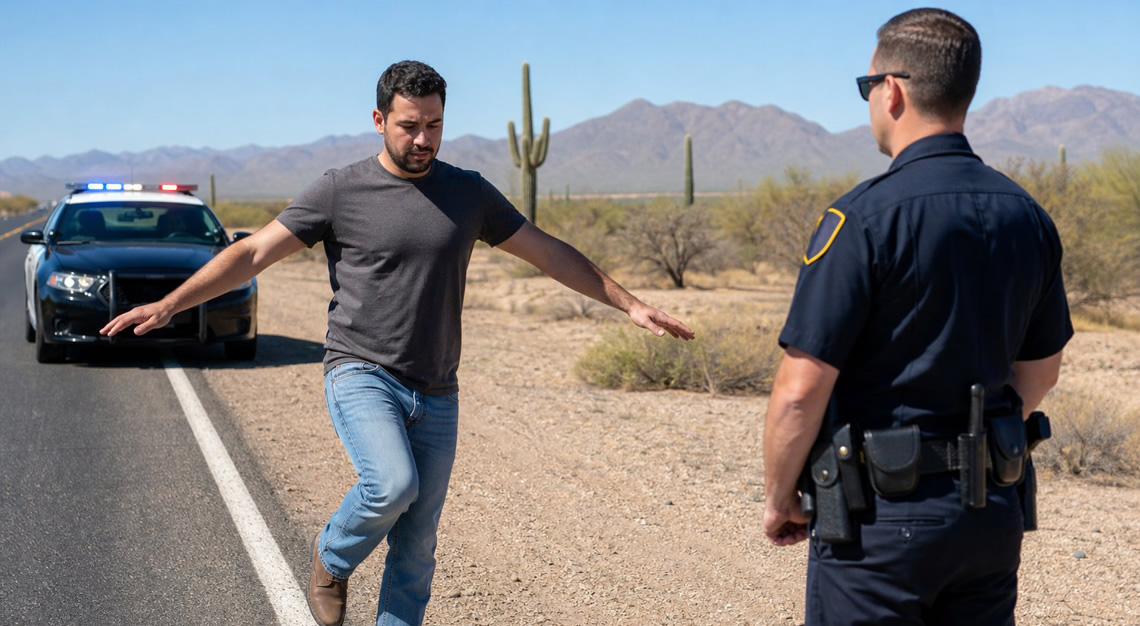
A field sobriety test (FST) is a physical or mental check that police use when they think a driver might be under the influence of alcohol or drugs. Officers give these tests on the side of the road during traffic stops. The main goal is to collect evidence about possible impairment.
The National Highway Traffic Safety Administration created three standardized field sobriety tests (SFSTs) for police to use nationwide. These standard tests include the Horizontal Gaze Nystagmus, the Walk-and-Turn, and the One-Leg Stand. Each one looks for specific physical signs of impairment.
Horizontal Gaze Nystagmus (HGN)
The HGN test checks how your eyes move when you follow an object from side to side. An officer will hold a pen or small flashlight about 12 to 15 inches from your face. They position it slightly above eye level and move it slowly across your field of vision.
The officer watches for involuntary jerking in your eyes. This jerking is called nystagmus. Alcohol can make your eyes jerk more than they normally would. The officer also checks if the jerking begins before your eyes reach a 45-degree angle. They look at each eye separately to spot these clues.
Before the test starts, the officer should limit visual distractions around you. This means turning you away from traffic lights, patrol car lights, and other bright or moving objects. You may need to take off your glasses if you wear them.
Walk-and-Turn
The Walk-and-Turn test asks you to walk in a specific pattern. You take nine heel-to-toe steps along a straight line, turn around using a certain method, and return with nine more heel-to-toe steps. The officer gives you detailed instructions first.
Officers look for eight different indicators during this test:
- Keeping your balance while receiving instructions
- Starting before the officer finishes explaining
- Stopping in the middle to steady yourself
- Not touching heel to toe on each step
- Stepping off the line
- Raising your arms from your sides for balance
- Taking the wrong number of steps
- Turning incorrectly
This test is also called the heel-to-toe test. It checks both your physical balance and your ability to follow instructions.
One-Leg Stand
The One-Leg Stand test checks your ability to balance on one foot while counting. You raise one foot about six inches off the ground and hold it there. While balancing, you count out loud by saying "one thousand one, one thousand two" and keep going until the officer tells you to stop. This normally takes about 30 seconds.
The officer looks for four specific signs:
- Swaying while balancing
- Lifting your arms away from your body
- Hopping on your standing foot
- Putting your raised foot down
Other Tests
Some officers use non-standard FSTs along with or instead of the three standardized tests. These might include saying part of the alphabet, counting in certain patterns, or touching your finger to your nose. The finger-to-nose test and finger counting test are examples. Another is the Rhomberg test, where you stand with your feet together and tilt your head back.
Courts typically see these tests as less reliable than standard field sobriety tests. Each test has specific steps that officers should follow. How well these tests work depends on proper administration and accurate observation by the officer.
Are Field Sobriety Tests Accurate?
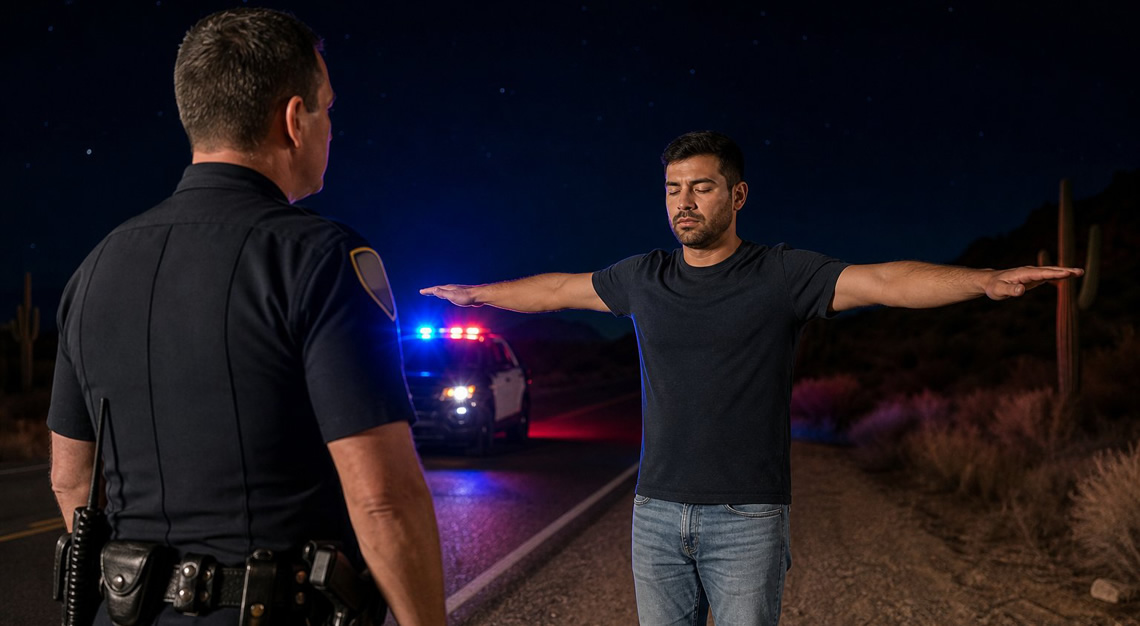
Field sobriety tests do not provide perfect results. The National Highway Traffic Safety Administration has researched how well these tests work in actual traffic stops.
The Horizontal Gaze Nystagmus test correctly spots impaired drivers about 77 percent of the time. The Walk and Turn test shows roughly 79 percent accuracy when you show two or more warning signs. The One-Leg Stand test does slightly better at 83 percent accuracy.
About one in five cases will produce incorrect results. Your performance can suffer even when you are completely sober. Your age, weight, physical fitness, and anxiety can all change your test results. Bad weather and bumpy road surfaces also reduce accuracy.
Officers may use poor test performance as evidence of impairment in court. However, these tests have clear limitations that can affect your case.
Do You Need To Agree To A Field Sobriety Test?
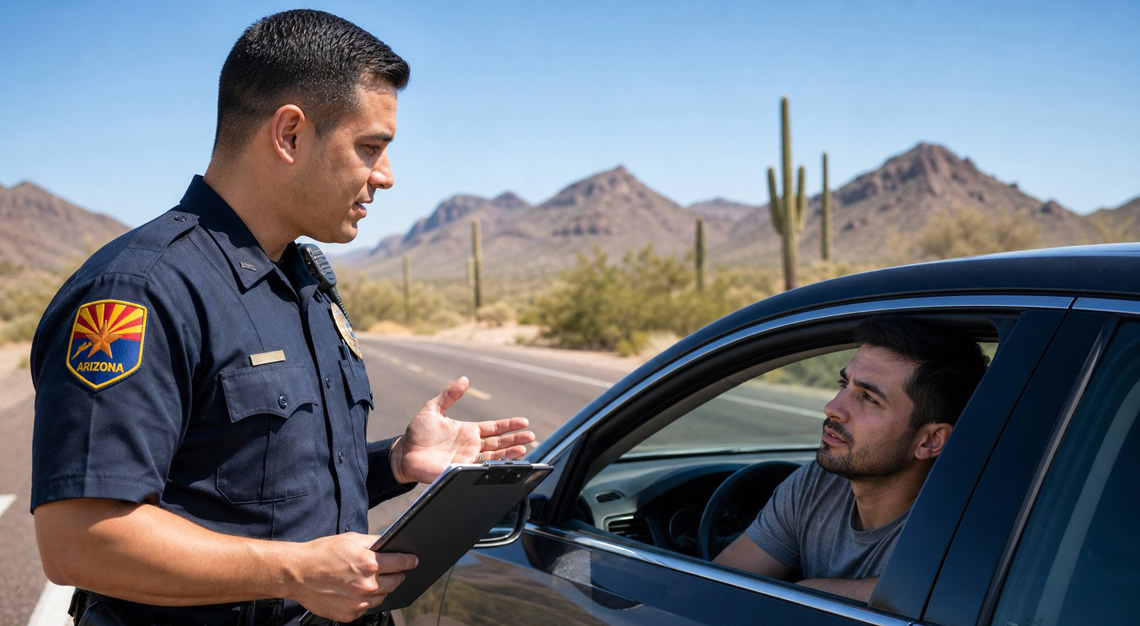
You are not required to take field sobriety tests in Arizona. These roadside physical tests are voluntary, and you can say no when an officer asks you to perform them during a DUI stop.
Arizona's implied consent law only covers chemical tests like breath or blood tests that happen after you are arrested. This law does not apply to field sobriety tests that occur before arrest.
Documents You Must Show:
When stopped by police, you must provide certain items. Refusing to provide these documents can lead to additional problems.
Required items include:
- Driver's license
- Proof of insurance
- Vehicle registration
- Your legal name
You can politely refuse to answer questions beyond providing these documents. Tell the officer you have been advised not to answer questions. Stay calm and polite when using your rights during a DUI stop. Anything you say can be used against you in court.
What Happens When You Decline a Field Sobriety Test?
What Occurs Right Away
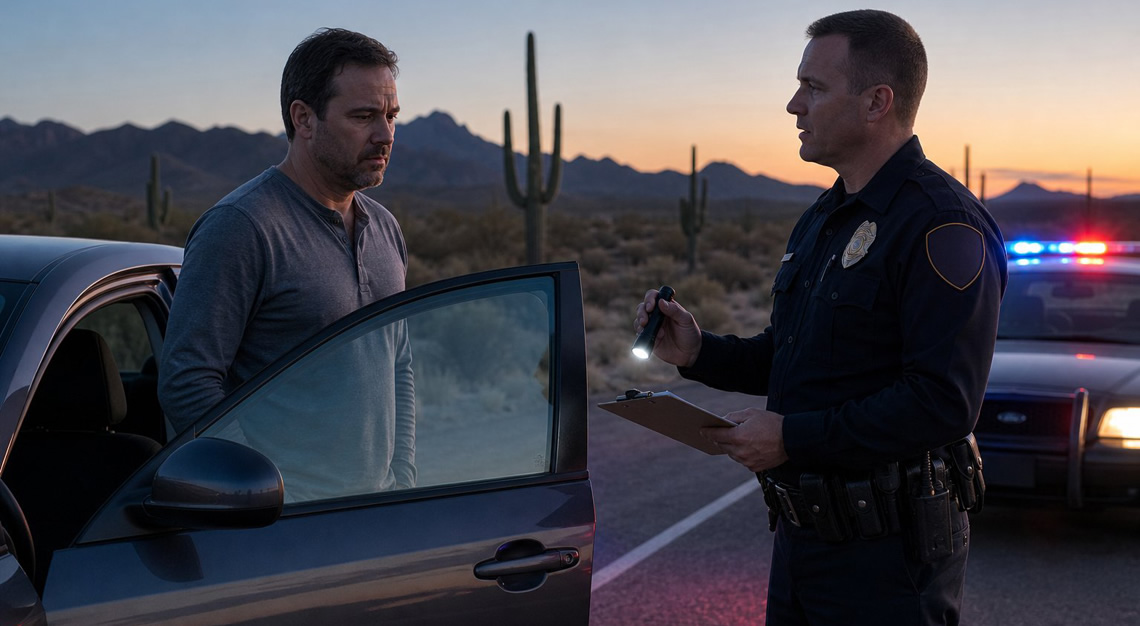
Your driver's license stays valid when you say no to a field sobriety test. The officer still needs probable cause to make a DUI arrest. Your refusal can contribute to their decision, but they typically rely on additional factors. These include the smell of alcohol on your breath, unclear speech, or your driving pattern before the stop.
The officer may choose to obtain a search warrant or proceed with arresting you on suspicion of driving under the influence.
How Your Case Moves Through Court
Your decision to refuse field sobriety test becomes evidence prosecutors can present to the jury. They will tell the court you declined because you believed you would not pass. This argument can weaken your defense strategy, even though you have the legal right to say no.
The prosecution builds their case using your refusal along with other evidence collected during the traffic stop.
Requirements for Chemical Testing
You will face a request for chemical tests after the officer makes an arrest. Arizona law makes these mandatory, unlike field sobriety tests. The three types are:
- Breathalyzer
- Blood test
- Urine test
Refusing these chemical tests triggers automatic penalties:
|
Number of Refusals |
License Suspension Length |
|---|---|
|
First time |
1 year |
|
Second time (within 84 months) |
2 years |
Officers cannot force you to take these tests without your permission or a valid warrant.
What Are Some Possible Defenses If I Fail A Field Sobriety Test?

Failing a field sobriety test does not guarantee a conviction. You have multiple ways to challenge the results and protect your rights.
Police officers must follow specific protocols when administering these tests. Any deviation from standard procedures can make the results questionable. A DUI defense attorney can challenge test validity if an officer failed to give proper instructions or changed testing methods.
Your physical condition plays a major role in test performance. Medical issues like inner ear problems, knee injuries, or back pain can make balance tests nearly impossible. Certain disabilities naturally affect coordination regardless of sobriety.
Testing conditions matter significantly. Poor lighting makes it hard to follow instructions. Uneven pavement or gravel surfaces affect balance during walk-and-turn tests. Rain, wind, or extreme heat create additional challenges. Footwear like boots or dress shoes can make standing on one leg extremely difficult.
Additional defense strategies include:
- Challenging the legality of your traffic stop
- Proving you were not operating the vehicle
- Showing improper administration of your rights
- Demonstrating the test location was unsafe
A DUI defense attorney examines every aspect of your case. They review dash camera footage, officer reports, and witness statements. They look for procedural errors and violations of your rights. Building a strong defense requires attention to detail and knowledge of DUI law.
Your attorney provides clear explanations of Arizona DUI laws and penalties. They outline realistic outcomes based on your situation. This helps you make informed choices about plea deals or taking your case to trial.
Contact a defense attorney at (602) 610-5019 to discuss your arrest. You receive advice tailored to your circumstances and learn the next steps in your defense.


