

What Should I Do Immediately After a DUI Arrest in Arizona? Essential Steps to Protect Your Rights
Getting arrested for a DUI in Arizona can turn your world upside down. You might feel confused, scared, or unsure about what comes next. The choices you make right after your arrest will play a big role in how your case unfolds.
Arizona has some of the toughest drunk driving laws in the United States. What you do in the first hours and days after your arrest matters. Understanding your rights and the legal steps ahead can help you protect your future, your license, and your freedom.
Key Takeaways

Acting quickly after a DUI arrest in Arizona matters. The first two days following your arrest can shape your entire case. You need to focus on protecting your rights and understanding what comes next.
You have the right to stay silent and request legal representation. Avoid answering detailed questions from law enforcement until you speak with a lawyer. Remaining calm and polite helps your situation.
Arizona's Motor Vehicle Division imposes strict deadlines. You typically have 15 days to challenge a license suspension. Missing this window can result in automatic penalties.
Keep all documents from your arrest. Save paperwork related to your traffic stop, sobriety tests, and breath test results. These records help your attorney build your defense.
Court procedures differ across Arizona counties. The number of hearings and specific requirements vary by location. Knowing your local court's process helps you prepare properly.
Legal guidance protects your future. An attorney who understands Arizona DUI laws can review your case and defend your rights immediately.
Stay Calm, Assert Your Rights, and Avoid Self-Incrimination
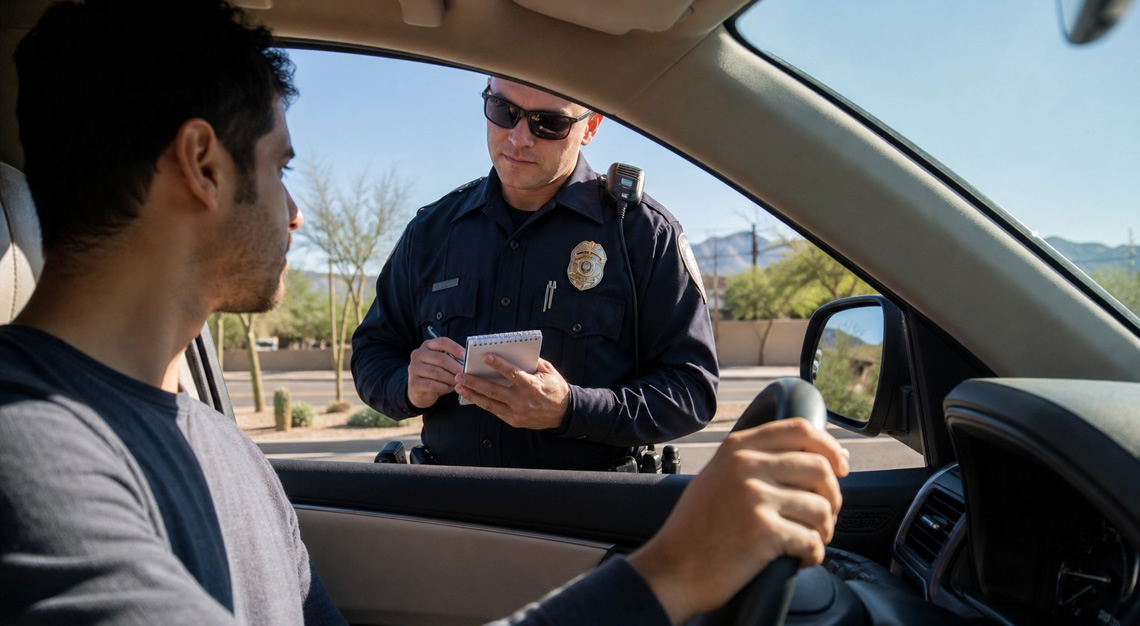
Getting arrested for drunk driving can feel overwhelming. Your actions and words during this time can shape your case outcome.
Keep your composure and treat officers with respect. Fighting back or arguing with police can result in extra charges like resisting arrest. Arizona takes these charges seriously. Officers document your behavior in their reports, and prosecutors may review these notes later.
You have the right to stay silent. You must provide basic facts like your name, birth date, and address. Beyond that, you can refuse to answer questions. Do not discuss:
- The amount of alcohol you drank
- Medications you are taking
- Past DUI arrests
- Written explanations
Tell officers clearly: "I want to remain silent and speak with a lawyer before answering questions." The court cannot punish you for using this right. Your lawyer can use your silence to build a stronger defense later.
Speaking politely shows respect without creating problems for your case. Do not apologize in writing or try to explain your situation. These statements can hurt your defense. Let your attorney handle all communication after you ask for legal representation.
What to Expect During Arizona DUI Booking and Release
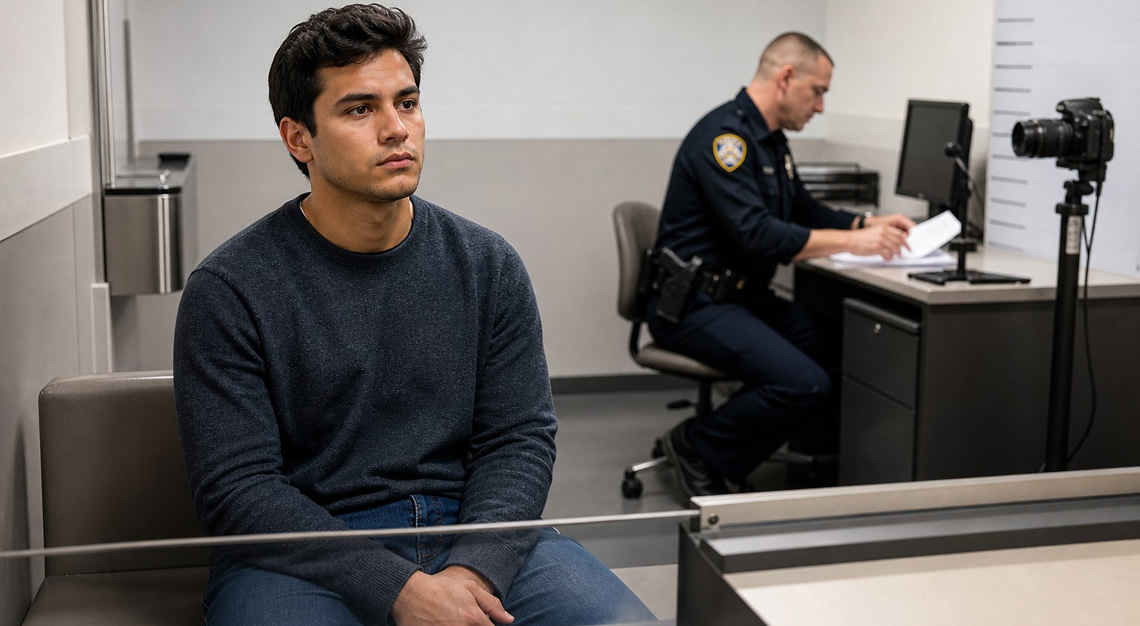
After police take you into custody for a DUI, they will transport you to a local police station or county jail. This is where the booking process begins.
Standard Booking Procedures
You will go through several required steps during booking:
- LiveScan fingerprinting for state records
- Photograph taking (mugshots) for law enforcement databases
- Property inventory where officers collect and document items like cash, watches, and belts
- Basic health screening to check for immediate medical needs
- Administrative forms related to your DUI case
Officers might request breath or blood samples during this time. They may also ask for urine tests in specific situations. The results from these chemical tests can become evidence in your case.
You should cooperate with the basic booking steps like fingerprinting and photographs. However, do not answer detailed questions about where you drove, what you drank, or how you performed on field sobriety tests until you talk with a lawyer.
Release Timeline and Conditions
Most people arrested for a first DUI get released the same day or the next morning. You might be released on your own recognizance, which means you sign a promise to appear in court. Some cases require posting bail, which typically costs between $1,000 and $5,000 based on your county and specific circumstances.
Your release may come with conditions like avoiding alcohol, not driving without a valid license, or agreeing to install an ignition interlock device if a court later orders one.
Keep all paperwork from booking and release in a secure place. These documents list your charges, first court date, and any immediate restrictions on your driving privileges.
Field Sobriety Tests, Breath Tests, and Arizona's Implied Consent Laws

Officers use standardized exercises to check for impairment during a DUI stop. These physical tasks measure your balance, coordination, and ability to follow instructions. The tests include the horizontal gaze nystagmus, walk-and-turn, and one-leg stand.
Accuracy rates for these tests:
|
Test |
NHTSA Accuracy Rate |
|---|---|
|
Horizontal Gaze Nystagmus |
77% |
|
Walk-and-Turn |
68% |
|
One-Leg Stand |
65% |
These exercises rely on officer judgment and interpretation. Many factors can affect your performance, including medical conditions, footwear, lighting conditions, road surfaces, and physical limitations related to age or injury. Even if you think you passed the tests, you still need legal representation to protect your rights.
Arizona law under A.R.S. 28-1321 requires you to take a breath or blood test when arrested for DUI. This requirement exists because you gave consent when you received your driver license. If you refuse testing after arrest, your license faces automatic suspension for one year on a first refusal. Additional refusals within seven years bring longer suspensions.
Keep all documents related to your breath test results or any refusal notices. Your attorney will review whether testing procedures were followed correctly and whether the arrest itself was lawful. Chemical test evidence can be challenged based on equipment calibration, officer training, and proper protocol compliance.
Review Your Arizona DUI Paperwork and Court Date Immediately

The first few hours after your release are the right time to organize every document from your DUI arrest. Look through all the papers you received carefully. These documents contain important information about your charges and what you need to do next.
You may have received the following paperwork:
- Citation or complaint showing your specific DUI charge type
- Release conditions paperwork
- Temporary driving permit or license seizure form
- Notice with your first court date and location
- MVD administrative hearing notice
Write down your court date, time, and location right away. Put it in your phone calendar and set several reminders. Your first appearance will likely be at Phoenix Municipal Court, Maricopa County Superior Court, or a local justice court depending on where the arrest happened.
If you miss your first court date, you will face:
- A bench warrant for your arrest
- New criminal charges
- Possible license suspension
- Higher bond amounts
Your arraignment is when the judge tells you the charges against you and asks for your plea. Do not enter a plea without talking to an attorney first. Making statements or admitting guilt too early can limit your options later.
Pay close attention to any notices from the Arizona Motor Vehicle Division. These administrative deadlines are separate from your criminal court dates. You must respond to both.
If any paperwork confuses you, have a DUI attorney review it quickly. They can tell you if you're facing a standard DUI, extreme DUI, or aggravated DUI charge. They can also spot if prosecutors added other charges.
Record What Happened and Gather Your Evidence

Your memory will start to fade fast after a DUI arrest. Studies show that people forget about half of new details within an hour and up to 70% within a day. Writing everything down right away can help your case later.
Basic Stop Information to Write Down
Get these facts on paper as soon as you can:
- The date and exact time officers pulled you over
- The specific location, including street name and city
- Weather conditions and road quality
- What the officer told you about why you were stopped
- The officer's name and their department
Field Sobriety Test Details
If officers asked you to perform roadside tests, write down what happened. Note where the tests took place and what directions the officer gave you. Record any confusion you had about the instructions. Write down any health issues or injuries that made the tests harder to complete. Pay attention to whether the ground was uneven or if lighting was poor.
Chemical Test Information
Document the testing process if you took a breath or blood test. Write down if there was a waiting period before testing. Arizona law requires officers to watch you for 15 to 20 minutes before a breath test. Note if you burped, got sick, or used any mouth products before the test.
Witness and Digital Evidence
Collect contact information from anyone who saw what happened. This includes passengers in your car, restaurant or bar workers, friends, or bystanders who watched your interaction with police.
Save digital records that show your timeline:
- Receipts from ride-share apps
- Credit card statements
- Phone location data
- Text messages from that night
Your vehicle might be in an impound lot for 30 days. You will need to show proof of ownership and insurance to get it back. Expect to pay about $150 plus towing fees.
Protecting Your Arizona Driving Privilege After a DUI Arrest

When police arrest you for DUI in Arizona, two separate cases begin at the same time. One case moves through criminal court. The other targets your license through the Motor Vehicle Division.
The officer who arrests you will send a report to the MVD. This report can lead to an administrative license suspension unless you take action quickly. You have 15 days from when you receive the notice to request an MVD administrative hearing. Missing this deadline means your license suspends automatically.
How long does an administrative suspension last?
|
Your Test Result |
First Offense Suspension |
|---|---|
|
BAC between 0.08% and 0.14% |
90 days |
|
Refused testing |
12 months |
|
Previous DUI on record |
1 to 3 years |
The MVD hearing gives you a chance to challenge the suspension before it takes effect. At this hearing, the MVD reviews whether the officer had legal grounds to stop you and whether testing procedures followed proper protocol.
Do not drive without checking your license status first. Call the MVD or speak with an attorney to confirm whether you can legally drive. Some drivers qualify for restricted licenses or may need to install an ignition interlock device on their vehicle to maintain limited driving privileges.
If the court convicts you of DUI, you will likely need an ignition interlock device installed in your car. You pay for the installation and monthly monitoring fees yourself. This device requires you to pass a breath test before your vehicle starts.
Your insurance costs will also rise sharply. Most carriers increase rates by 50% to 300% after a DUI. You may need to file an SR-22 form proving you carry high-risk insurance coverage.
Never drive on a suspended license. Doing so can turn your misdemeanor DUI into a felony aggravated DUI charge. Prison sentences for aggravated DUI range from 3 to 13 years.
Contact an Experienced Arizona DUI Attorney as Soon as Possible

You should reach out to a DUI lawyer within 24 to 48 hours of your arrest. Acting fast gives you the best chance to protect your rights and build a strong defense.
A skilled lawyer can look at your arrest paperwork and test results right away. They will search for problems with how the police handled your case. Your attorney can also start collecting evidence that might help you, like statements from people who saw what happened.
Bring these details to your first meeting:
- When and where the arrest took place
- Which police department arrested you
- What tests you took at the scene
- Any past DUI charges
- Job or license issues that could be affected
Your lawyer needs to act quickly to get video evidence. Police dashcam footage, bodycam recordings, and videos from nearby stores often get deleted after 30 to 90 days. If you wait too long, this evidence could be lost forever.
You also face tight deadlines to challenge your license suspension. Missing these deadlines can cost you your driving privileges even before your court date.
A local attorney knows the courts, judges, and prosecutors in your area. This knowledge helps them negotiate better outcomes and spot weaknesses in the state's case against you.
Your lawyer will review the evidence, talk to prosecutors, explain your options, and prepare for trial if needed. They understand Arizona DUI laws and Motor Vehicle Division rules that most people find confusing.
Each DUI case is different. What works in one situation might not work in yours. Personal legal help from someone who knows Arizona DUI law can change the outcome of your case.
Take Practical Steps in the First 24–48 Hours After Release

Staying organized and taking action quickly after your release can protect your legal rights and reduce stress. Focus on these concrete steps.
Get Safe Transportation
Find reliable ways to get around without driving. Use rideshares, public transit, or ask trusted friends or family for rides. Do not get behind the wheel if your license status is uncertain.
Stay Organized
Create a system to track everything related to your case. Use a folder or digital file to store court notices, MVD letters, and any paperwork from your attorney. Write down all upcoming dates for hearings, meetings, and deadlines. Missing a single deadline can harm your case.
Protect Your Case Through Silence
Do not discuss your arrest with anyone except your lawyer. Avoid posting on social media or talking about the incident with friends. Anything you say or post can be obtained through legal processes and used against you in court.
Handle Work Matters Carefully
Talk to your attorney before notifying your employer. You may need to inform your workplace if you have a commercial driver's license or work in certain professional roles. CDL holders typically face a one-year ban. Your lawyer can guide you on what to share and when.
Address Your Mental Health
DUI arrests often trigger depression and anxiety. Reach out to trusted people in your life or contact a counselor. Support groups and therapy can help you process feelings of guilt and worry during this difficult time.
Consider Voluntary Programs
Enrolling in alcohol education or treatment programs before the court requires it shows responsibility. This proactive step can demonstrate to the judge and prosecutor that you take the situation seriously.
Common Questions About DUI Arrests in Arizona

Do first-time DUI offenders face jail time in Arizona?
Arizona requires jail time for most first DUI offenses. The amount of time you serve depends on your blood alcohol concentration at the time of arrest.
A standard first offense with a BAC between 0.08% and 0.14% under A.R.S. 28-1381 requires at least 10 days in jail. Some of this time may be served through home detention or alcohol education programs.
Penalties increase with higher BAC levels:
- Extreme DUI (BAC 0.15% to 0.199%) under A.R.S. 28-1382 requires 30 days minimum
- Super extreme DUI (BAC 0.20% or higher) carries even longer sentences
- Aggravated DUI under A.R.S. 28-1383 involves felony charges with harsher consequences
Your first conviction brings fines around $1,800, mandatory alcohol programs, and a six-month license suspension. Total costs often reach $10,000 to $20,000 when you include fees, insurance rate increases, and legal expenses.
You must follow all court orders. This includes attending every hearing and finishing required programs or community service. A lawyer can review your specific situation to estimate your actual jail exposure.
What happens to my driver's license if I live in another state?
Arizona can suspend your driving privileges within the state. The state also reports DUI convictions and suspensions to your home state through interstate agreements.
Your home state decides what happens to your license based on its own laws. Many states automatically suspend licenses when they receive notice of an out-of-state DUI.
Action steps for out-of-state drivers:
- Speak with an Arizona DUI lawyer immediately
- Contact an attorney in your home state to understand local consequences
- Request any required administrative hearings before deadlines pass
- Track all deadlines in both states
State laws and county procedures differ greatly. Missing a deadline in either state can result in automatic suspension. You need legal guidance in both locations to protect your valid license.
Can DUI charges be lowered or thrown out?
Some charges can be reduced or dismissed when problems exist with your arrest. Your attorney will examine the traffic stop, arrest procedures, field sobriety tests, and chemical test protocols.
Prosecutors sometimes agree to amended charges like reckless driving. Whether this happens depends on the evidence strength, local policies, and your driving record.
Common defense issues that may help your case:
- Improper traffic stop without reasonable suspicion
- Mistakes in field sobriety test administration
- Problems with breathalyzer calibration or maintenance
- Violations of your rights during arrest
- Missing or incomplete police reports
Cases with skilled legal representation achieve better outcomes than those without attorneys. Only a detailed review of your specific case can determine if reduction or dismissal is realistic.
How soon should you hire a DUI attorney?
Hire a DUI lawyer within 24 to 48 hours of your arrest. This timing is critical for protecting evidence and handling immediate license issues.
Arizona runs two separate cases after a DUI arrest. One is the criminal court case. The other is an administrative case with the Motor Vehicle Division. Both have strict deadlines that start immediately.
Early representation helps you handle interactions with insurance companies, employers, and law enforcement. Your attorney can guide you on what to say and what to avoid. The MVD hearing officer operates on deadlines that do not wait for you to be ready.
Does a DUI conviction remain on your record permanently?
Arizona DUI convictions stay on your criminal record permanently. The state does not allow expungement of DUI offenses.
You can petition to set aside a conviction after completing your full sentence. This action shows that you fulfilled all requirements. However, the conviction still appears on background checks.
A DUI conviction affects multiple areas:
|
Area |
Impact Duration |
|---|---|
|
Employment screening |
Permanent |
|
Professional licenses |
Varies by profession |
|
Insurance rates |
3-10 years |
|
International travel |
Varies by country |
Arizona DUI penalties under A.R.S. 28-1381, 28-1382, and 28-1383 create long-term consequences. This makes your initial defense strategy extremely important. Never plead guilty without understanding the full implications and whether you can fight the charge or negotiate better terms.
How Arizona Criminal Lawyer Can Help With Your Arizona DUI Case

Arizona Criminal Lawyer Attorneys at Law has a team that focuses on DUI defense across Arizona. The firm's lawyers know how local courts work and understand the procedures used by prosecutors and hearing officers in different parts of the state.
The attorneys at Arizona Criminal Lawyer can guide you through important decisions about your case. They will help you decide whether to fight an MVD license suspension at a hearing. They can also work to negotiate for reduced charges or explore alternative sentencing based on your situation and history.
If going to trial makes sense for your case, the team will prepare your defense to present in court.
Getting legal help quickly matters when you face DUI charges. Your decisions early on can affect both your court case and your ability to drive.
Call Arizona Criminal Lawyer at (602) 610-5019 to set up a private consultation. Taking action now gives you the best chance to protect your rights and your future.


