
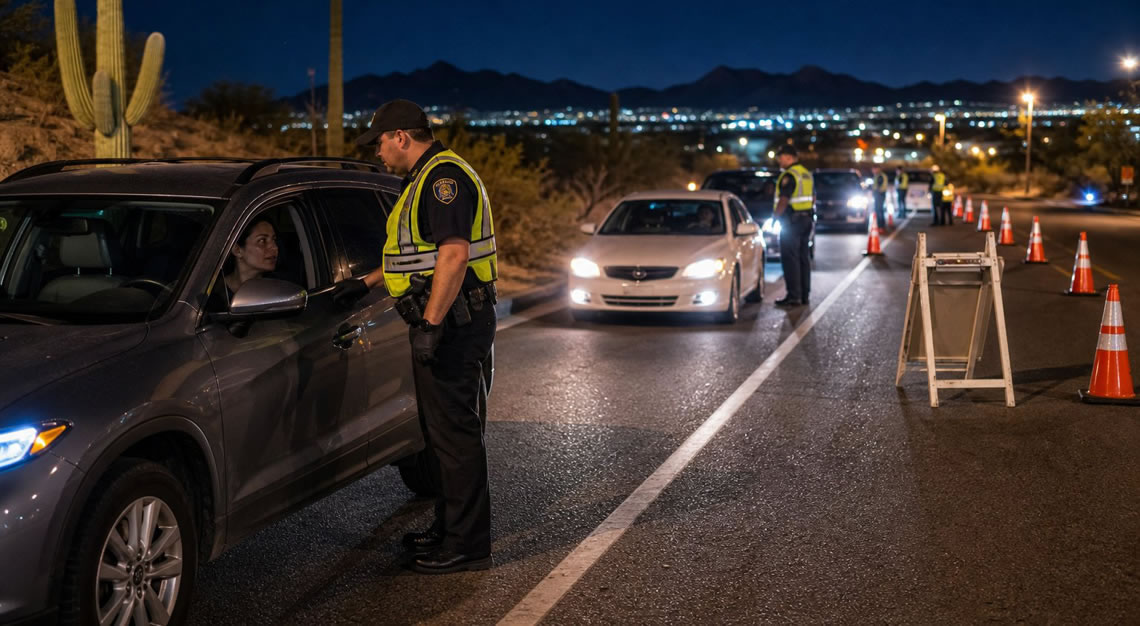
How Do DUI Checkpoints Work in Arizona? Legal Requirements and Your Rights
Are DUI Checkpoints Legal in Arizona?
DUI checkpoints are legal in Arizona. Police can set up these roadblocks across the state to check drivers for signs of impairment. Arizona is one of 38 states that allows this practice.
Some states have banned DUI checkpoints because of concerns about the Fourth Amendment. Arizona has not done this. Courts have ruled that these stops are legal when officers follow proper procedures.
You will most likely see these checkpoints late at night or early in the morning. Police typically schedule them on Fridays, Saturdays, and holidays. These are times when drunk driving happens more often.
What You'll Find at Most Checkpoints:
- Temporary roadblocks set up on public streets
- Officers stopping vehicles to look for impairment signs
- Scheduled during high-risk periods for drunk driving
- May happen monthly or even more often
Police must follow strict rules when running these checkpoints. You keep your constitutional rights when you go through one. Officers cannot run these stops any way they want.
How Arizona DUI Checkpoints Work
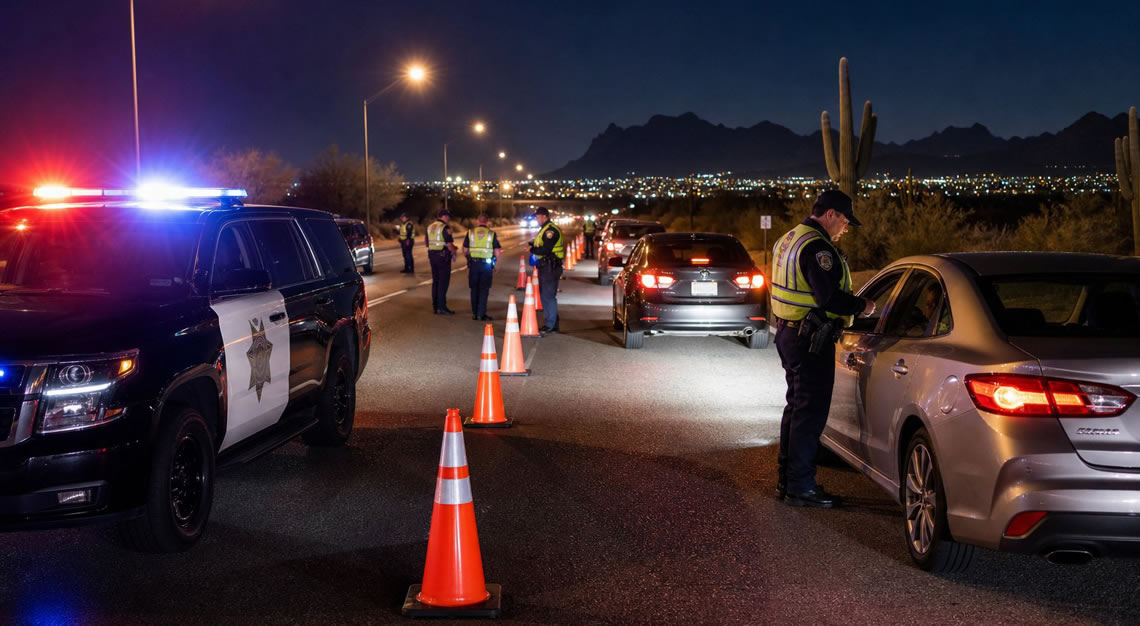
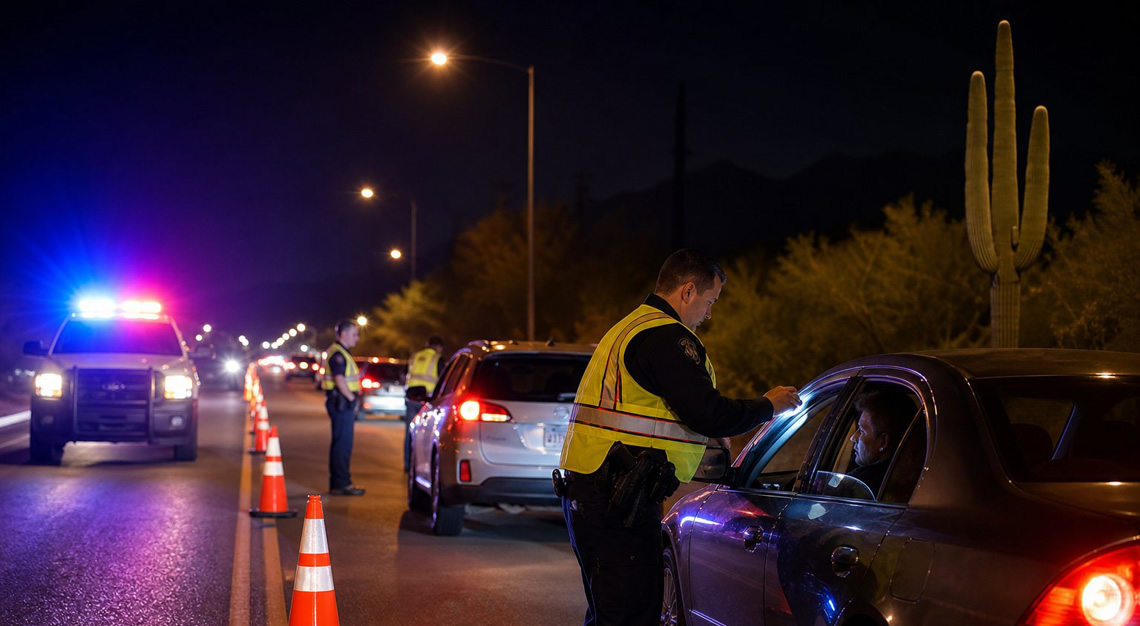
Police departments establish sobriety checkpoints at locations where they expect to find impaired drivers. These spots often include areas near bars, restaurants, concert venues, or sporting events. Arizona DUI checkpoints can be set up on any public road throughout the state.
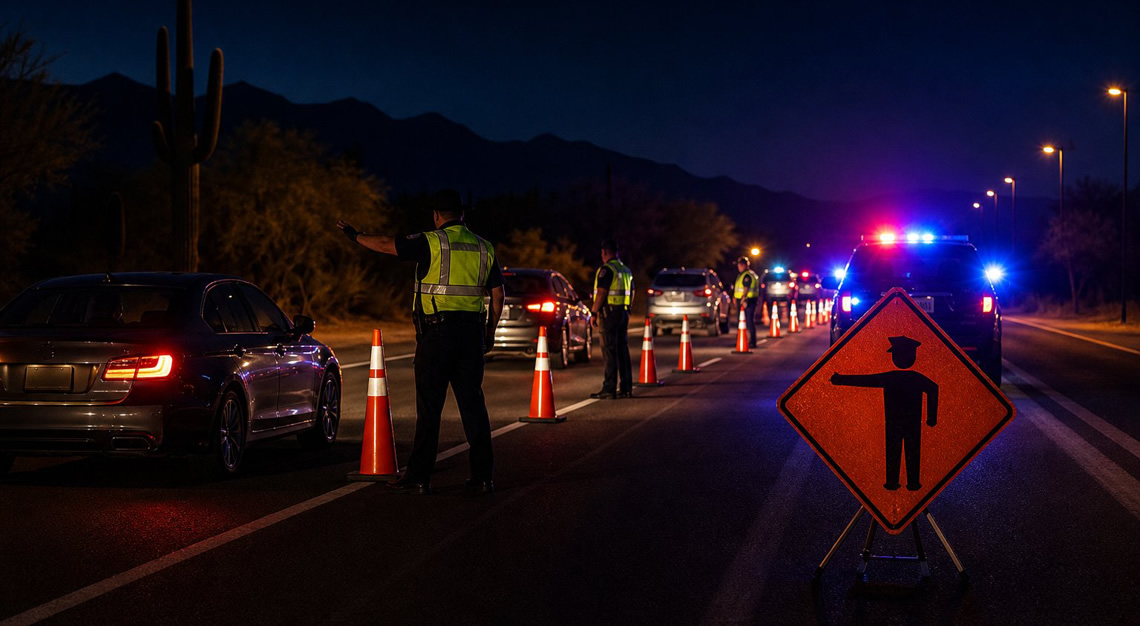
Law enforcement agencies must notify the public about checkpoint locations before they happen. They share this information through newspapers and local news outlets. You will also see visible signs as you get close to a checkpoint so you know what is ahead.
How Officers Select Which Vehicles to Stop
Officers follow one of two approaches when stopping cars:
- Every vehicle that comes through the checkpoint gets stopped
- A set pattern determines which vehicles to stop, like every third or fifth car
When you arrive at the checkpoint, officers watch for signs of impairment. They will ask you questions and observe your responses carefully. Officers look at how you speak, move, and act during the interaction.
If an officer sees something that raises concerns about impairment, they may ask you to perform field sobriety tests. These tests help officers decide if you are driving under the influence.
Standard Physical Tests Used During Traffic Stops
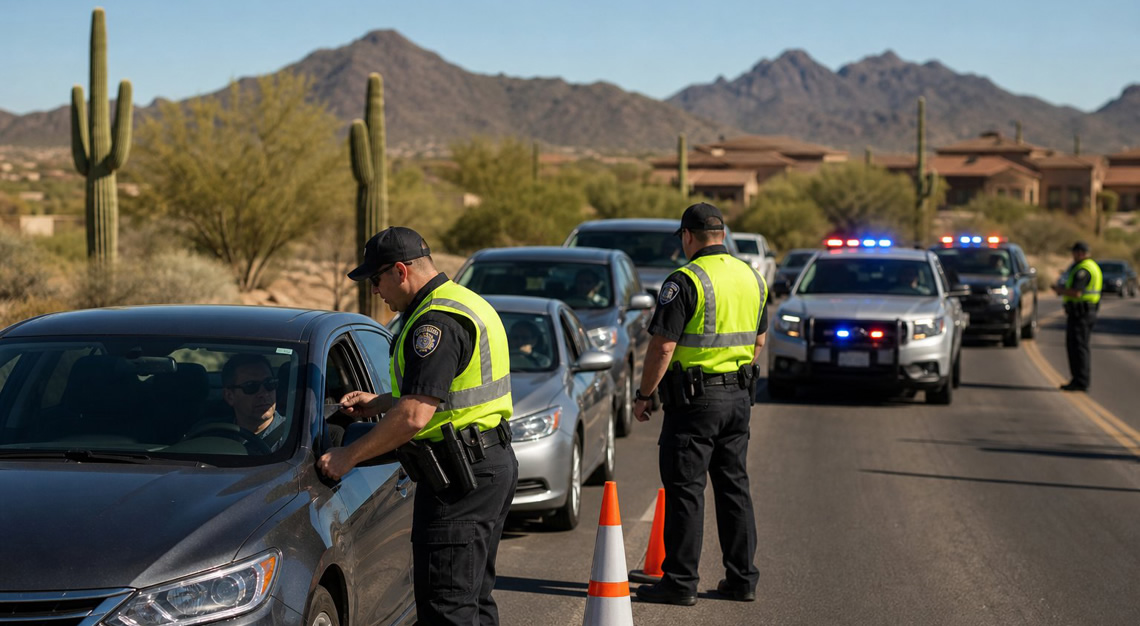
Arizona police officers use three main physical tests when they suspect a driver might be impaired. These tests check how well you can move your body and follow directions.
The eye tracking test asks you to follow a moving object while keeping your head still. An officer holds a pen or small light and moves it from left to right. They watch for jerking movements in your eyes called horizontal gaze nystagmus. Your eyes should move smoothly, but alcohol can cause them to twitch or jump.
The walking test requires you to take nine heel-to-toe steps along a straight line, turn on one foot, and walk back the same way. Officers watch to see if you:
- Step off the line
- Use your arms to keep balance
- Stop walking to steady yourself
- Take the wrong number of steps
- Turn incorrectly
The standing test asks you to lift one foot about six inches off the ground and count out loud for 30 seconds. Officers look for swaying, hopping, dropping your foot, or raising your arms for balance.
Officers write down everything they see during these tests. Their notes become evidence that prosecutors can use in court against you.
How Accurate Are Field Sobriety Tests?
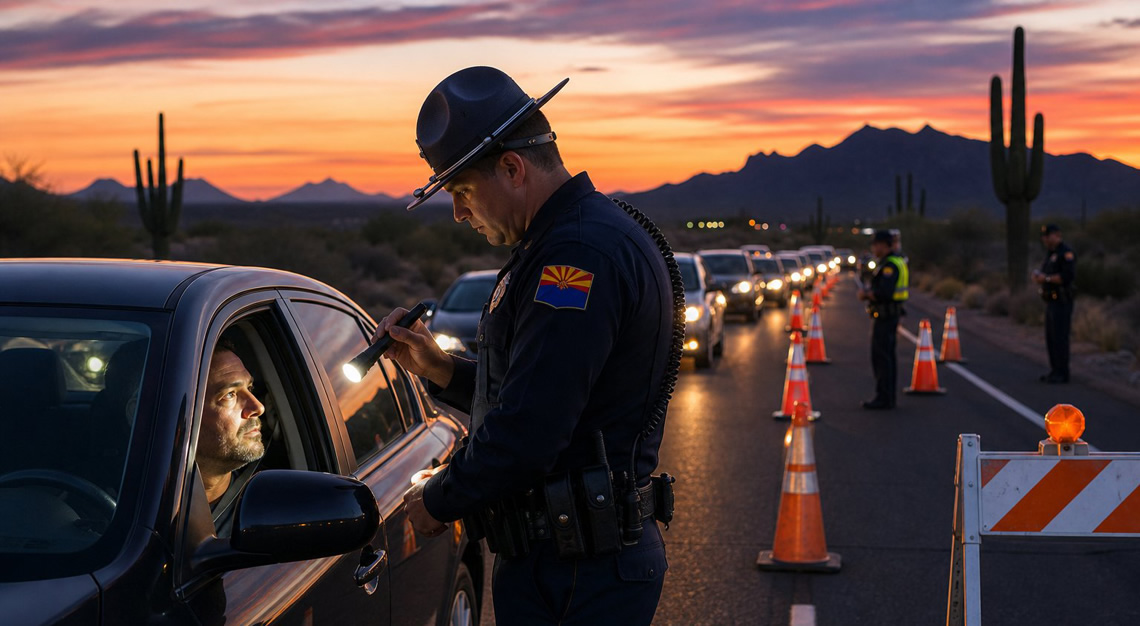
Field sobriety tests frequently fail to provide reliable evidence of alcohol impairment. These roadside evaluations depend on police officer judgment rather than precise measurements of your blood alcohol level. Studies show that even sober individuals sometimes cannot pass these tests.
Your physical abilities significantly affect how you perform on these tests. Many people cannot naturally balance on one foot for long periods. Medical conditions, age, injuries, and prescription drugs can all impact your performance. None of these factors relate to whether you have been drinking.
The environment where testing occurs also matters. Rain, darkness, and cracked pavement make these tests more difficult to complete. Unlike chemical breath tests that measure actual alcohol levels, field sobriety tests rely on physical tasks.
Research from the National Highway Traffic Safety Administration reveals serious reliability issues:
- Horizontal Gaze Nystagmus (HGN): 77% accurate
- Walk-and-Turn: 68% accurate
- One-Leg Stand: 65% accurate
These accuracy rates fall short of what courts typically expect from scientific evidence. The tests involve too much personal interpretation by officers. Defense lawyers regularly challenge these results in Arizona DUI cases. Your rights during traffic stops include protections against unreliable testing methods. Knowing these accuracy limitations helps you understand your options when stopped by police.
Your Rights at DUI Checkpoints
Information You Are Required to Give
Arizona law limits what you must share with police during a checkpoint stop. You need to hand over four specific items:
- Your driver's license
- Proof of vehicle registration
- Current insurance documentation
- Your legal name when asked
You don't have to provide anything beyond these basic requirements. Officers may ask for more details, but the law doesn't force you to give them.
Staying Silent During Questioning
Police will likely ask questions like "Did you drink tonight?" or "What were you doing earlier?" Your answers become evidence that prosecutors can use against you. Even saying you had one beer gives them material to build a case.
You can refuse to answer these questions. Say something like "I don't want to answer that" in a calm voice. This applies to everything except your basic identifying information.
Instructions You Cannot Refuse
Some orders from officers are mandatory. If police tell you to step out of your car, you must do it. Refusing this command can lead to separate criminal charges. Follow direct orders about your movements and actions during the stop.
Steps to Safeguard Your Interests
You can decline field sobriety tests and breathalyzer requests without breaking any laws. Officers might imply that refusing these tests helps you, but this isn't true.
Stay calm and courteous throughout the encounter. Hand over your documents quickly when asked. Don't offer extra information or explanations about your evening. If officers violate proper procedures during your stop, this could help your defense later. Reach out to a lawyer as soon as possible after leaving the checkpoint.
Can You Refuse a DUI Test in Arizona?
You have the legal right to refuse field sobriety tests when stopped at a DUI checkpoint or during a traffic stop in Arizona. These roadside evaluations include balance exercises and eye tracking assessments. Police officers cannot physically compel you to perform these tests.
Your refusal carries consequences. Officers may arrest you based on suspected impairment and transport you to the station for further evaluation. Prosecutors can later point to your refusal in court as evidence that you believed you would fail.
After declining field sobriety tests, officers typically request a portable breath test. These handheld devices measure alcohol levels at the roadside but are less accurate than equipment used at police stations. You can wait for more precise testing methods at the station.
Chemical testing options include:
- Breath analysis
- Blood draws
- Urine samples
These tests deliver more reliable results than roadside evaluations.
You can refuse chemical testing, but Arizona's implied consent law imposes severe penalties. When you obtained your driver's license, you agreed to submit to testing if arrested for DUI. Refusing triggers an automatic license suspension lasting at least 12 months. This suspension occurs regardless of whether you face conviction.
Officers frequently obtain search warrants after refusal. The warrant legally requires you to submit to testing. This eliminates your ability to decline.
Refusing chemical tests is typically unwise because you face guaranteed license suspension and likely court-ordered testing anyway.
Getting Help After a Checkpoint Arrest

A checkpoint arrest for DUI requires fast action. You need legal representation to examine your case and explore your defense options. Waiting too long can hurt your chances of a favorable outcome.
An attorney who focuses on DUI cases knows Arizona laws and checkpoint procedures. They understand what officers must do during these stops and when mistakes happen. This knowledge becomes critical in building your defense.
Services Your Legal Representative Provides
Legal counsel offers specific help after your arrest:
- Case evaluation - Your lawyer examines every detail of your stop to find problems with how officers handled the checkpoint
- Rights protection - They identify if police violated constitutional rules during your interaction
- Charge reduction - Your attorney works with prosecutors to lower the charges you face
- Court advocacy - You get representation at all hearings and proceedings
- License defense - They guide you through Motor Vehicle Division hearings to protect your driving privileges
Having a lawyer changes how your case unfolds. They handle paperwork, court dates, and legal arguments while you focus on daily life.
Your attorney provides clear explanations of Arizona DUI laws and penalties. They outline realistic outcomes based on your situation. This helps you make informed choices about plea deals or taking your case to trial.
Contact a defense attorney at (602) 610-5019 to discuss your arrest. You receive advice tailored to your circumstances and learn the next steps in your defense.


