

What is a Drug-Related DUI in Arizona? Drug Related DUI in Arizona: Laws, Penalties, and Legal Consequences
Legal Representation for Drug-Related Driving Offenses
Arizona takes impaired driving seriously. You can face charges for operating a vehicle while any substance affects your ability to drive safely. This includes illegal drugs, prescription medications, and over-the-counter products.
An attorney handles several key tasks for your defense. They examine how police conducted your traffic stop and review evidence collection procedures. Your lawyer analyzes the state's case against you and identifies potential problems with the charges.
Your attorney provides:
- Case review and evidence analysis
- Explanation of your legal rights
- Representation during court proceedings
- Defense strategy development
Lawyers who worked as prosecutors before offer specific advantages. They know how the state prepares cases and what tactics prove effective in court. This experience helps them find weak points in your charges and build stronger defense strategies.
Operating a Vehicle While Using Illegal Substances
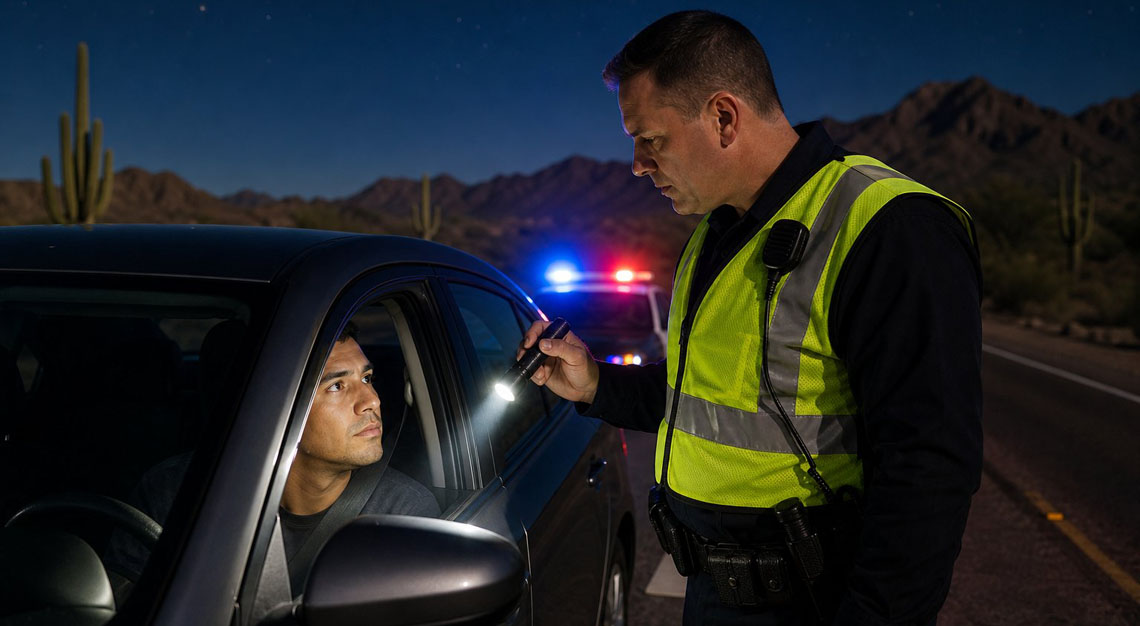
Two Categories of Criminal Charges
Arizona prosecutes these cases through two distinct legal frameworks. The first requires evidence that substances compromised your driving capabilities to any degree. Law enforcement must demonstrate that your mental or physical faculties were affected while you operated the vehicle.
The second category operates under A.R.S. § 28-1381. You face charges if illegal substances or their byproducts appear in your system during a DUI investigation. Prosecutors do not need to establish impairment under this approach.
Understanding Drug Byproducts in Your System
After your body processes controlled substances, residual compounds remain. These compounds can persist for extended periods after consumption. You might test positive weeks after use, even when no longer experiencing effects.
The detection of these byproducts alone can support prosecution. Medical marijuana patients do not receive automatic exemptions from these charges under Arizona DUI law.
How Authorities Detect Substances
Officers employ multiple techniques during a DUI investigation:
- Blood test analysis
- Urine sample collection
- Field sobriety tests
- DRE evaluation procedures
A drug recognition expert receives specialized training to identify signs of substance use. The DRE evaluation includes detailed observations that extend beyond standard roadside assessments.
Arizona operates under implied consent provisions. When you refuse drug screening, you automatically trigger a 12-month license suspension through an MVD hearing.
Consequences of a Conviction
Your first offense for drugged driving constitutes a Class 1 misdemeanor. Courts impose specific requirements:
|
Consequence |
Requirement |
|---|---|
|
Incarceration |
10 days minimum, up to 6 months maximum |
|
Suspended sentence |
9 days eligible for suspension with drug screening completion |
|
Financial penalties |
Mandatory fines and fees |
|
Treatment programs |
Required drug screening and counseling |
|
Ignition interlock device |
May be required for reinstatement |
License Penalties for Drug-Related DUI
Drug-related DUI cases result in more restrictive license consequences. You face up to one year of suspension. Arizona law does not permit restricted permits for work or school during this suspension period, unlike alcohol-based cases.
Commercial driver license holders face additional professional consequences that can end their careers.
Related Criminal Counts
A single traffic stop often produces multiple charges. Authorities frequently add possession counts, paraphernalia violations, or transportation charges. Each count carries independent penalties.
You remain in actual physical control of a vehicle even when parked, which can support additional charges.
Defenses to Prescription Drug DUI and Illegal Substance Cases
Valid legal challenges exist for these prosecutions. Officers need reasonable suspicion before initiating a traffic stop. Stops lacking proper justification face potential suppression.
Field sobriety tests require precise administration. Officer errors during testing create opportunities for challenge. Blood test and urine analysis must follow strict protocols. Laboratory mistakes in sample handling or analysis provide grounds for questioning results.
Key defense areas include:
- Improper stop procedures
- Flawed field sobriety tests
- Blood test contamination or storage issues
- Chain of custody problems
- DRE evaluation errors
- Violation of testing protocols
Prosecutors must prove guilt beyond a reasonable doubt. Missing evidence or procedural violations can result in charge reduction or dismissal. The presence of prescription medications, opioids, benzodiazepines, sleep aids, antidepressants, or muscle relaxants may also create defense opportunities when you hold valid prescriptions.
Driving under the influence charges require careful examination of every investigative step. Impaired to the slightest degree standards demand strong evidence that authorities do not always possess.
Get Help from a Skilled Drug DUI Attorney in Phoenix and Nearby Communities

If you face charges for driving under the influence of drugs in Arizona, a defense lawyer can review your case for weak points in what the state has against you. Your lawyer will search for errors that officers made or times when your constitutional rights were not respected.
Legal help is ready throughout the Phoenix area. Lawyers serve cities like Mesa, Chandler, Gilbert, and Scottsdale.
A qualified lawyer can assist you by:
- Looking at arrest steps for mistakes
- Making sure your rights stayed protected
- Fighting the evidence the state collected
- Creating a plan to defend you
You can contact a legal team for a free meeting to talk about what happened. These meetings cost nothing and help you learn what choices you have.
Call the defense team at (602) 610-5019 to set up your free consultation.


